
How Accurate Is the Gender Blood Test? Clinic Test vs Home Kits
How the test reads your baby's DNA from 6 weeks, why a clinic blood draw is more reliable than a home kit, and the few things that can affect the answer.
Quick Answer
A gender blood test taken in a clinic is highly accurate: our Early Gender Blood Test is 99% accurate from 6 weeks. It looks for boy DNA from your baby in your bloodstream. The things that most often cause a wrong or unclear result are testing too early, getting your dates wrong, and, with home kits, boy DNA from someone else getting into the sample. A scan first to confirm your dates, and a blood draw taken by a professional, avoid most of them.
How the Test Works
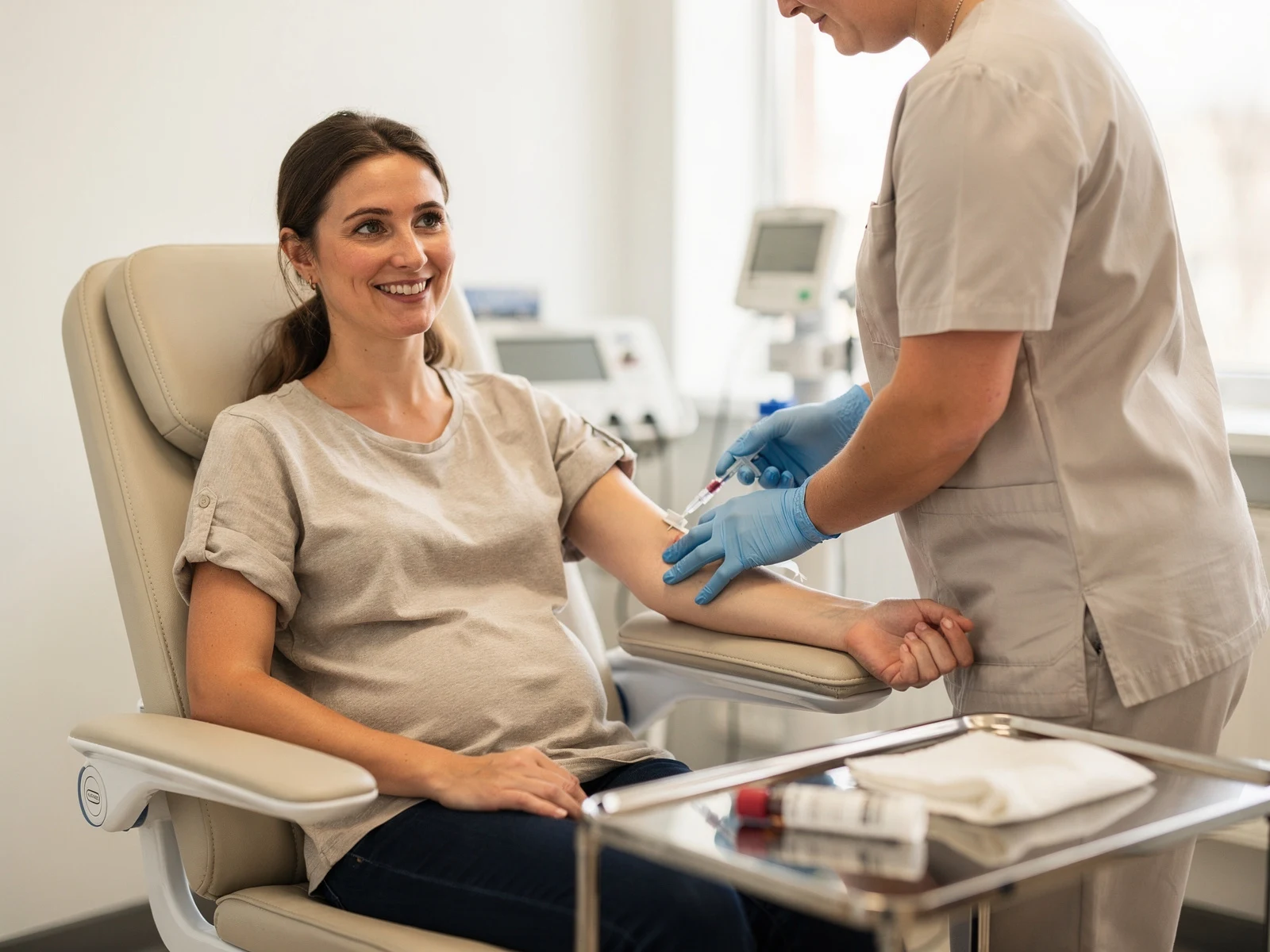
From early pregnancy, tiny fragments of your baby's DNA cross the placenta into your blood. The lab separates them out and looks for DNA from the Y chromosome, which only boys have. If Y chromosome DNA is found, the result is a boy. If none is found, the result is a girl.
That second point matters. A girl result is based on finding no boy DNA, so there has to be enough of your baby's DNA in the sample for that absence to mean something. The amount rises as pregnancy goes on, which is why the test isn't done before 6 weeks and why your dates need to be right.
How Accurate Is It?
Our Early Gender Blood Test is 99% accurate from 6 weeks. One tube of blood is taken at our Gosforth clinic and sent to a specialist UK laboratory, and results usually come back within 5 to 7 working days. No test is ever 100%, and the rare wrong results almost always come down to one of the causes in the next section.
Testing a little later does not make a correct sample more accurate, but it does make an unclear result less likely, because there is more of your baby's DNA to work with. If you are not sure how far along you are, that is a good reason to have a scan first.
Clinic Test or Home Kit?
Home gender tests ask you to take a few drops of blood from your fingertip and post them to a lab. They can work, but they are much more open to one problem: contamination. Because the test is looking for any trace of boy DNA, a tiny amount from a partner, a son, or something a man has touched can turn a girl result into a false boy result.
| Clinic blood test | Home finger-prick kit | |
|---|---|---|
| Who takes the sample | A trained professional, from a vein in your arm | You, from your fingertip |
| Risk of boy DNA getting in | Very low, in a clean clinical setting | Higher: skin, hands and surfaces at home |
| Amount of blood | A full tube | A few drops |
| Checking your dates | Can be paired with a scan on the same visit | Based on your own dates |
| Price here | £125 | Varies by brand |
If you have already used a home kit and the result surprised you, a clinic test or a scan from 15 weeks is a sensible way to check it.
What Can Affect the Result
- Testing too early. Before 6 weeks there may not be enough of your baby's DNA to read, and a pregnancy dated from your last period can be younger than you think
- Uncertain dates. Late ovulation and irregular cycles are common, so we recommend confirming your dates with a scan rather than relying on your last period
- Twins. The test can tell you if at least one baby is a boy, but not whether one or both are boys. If no boy DNA is found, both babies are expected to be girls
- A twin that was lost early. DNA from a twin that stopped developing can stay in your blood for a while and lead to a boy result. A scan beforehand shows how many babies there are
- Recent transfusion, transplant or certain kinds of IVF. Please tell us before your test so we can advise you
Why We Recommend a Scan First
A scan before the blood test confirms that the pregnancy is developing, how far along you are, and how many babies there are. All three affect whether the lab can give a clear answer. It cannot guarantee a result, but it removes the commonest reasons for a problem.
You can pair the blood test with a scan that suits your stage: an Early Viability Scan at 6 to 8 weeks (£189 together), an Early Reassurance Scan at 12 to 14 weeks (£175), or a Gender and Wellbeing Scan from 15 weeks (£230). If you have already had a scan that dated your pregnancy, the blood test on its own is fine.
What If the Result Is Inconclusive?
Occasionally the lab cannot give a clear answer. If a sample fails for a laboratory reason, one repeat test is free. If the lab finds there is not yet enough of your baby's DNA, usually because the pregnancy is earlier than thought, a new sample is needed once you are further along. Either way, we will contact you and talk you through your options.
Seeing It for Yourself
Plenty of parents like to see the answer on screen too. From 15 weeks a gender scan can show it, and you can have the result sealed in an envelope for a reveal. Our guide to NIPT on the NHS or privately covers the screening test, which can also report your baby's sex from 10 weeks.
"My gender blood test was on Saturday and I've already received my results the following Tuesday afternoon!" Samantha, Google review, July 2026
The Early Gender Blood Test in Gosforth
From 6 weeks, £125 for the blood test, or paired with a scan from £175. A £50 deposit secures your appointment.
Frequently Asked Questions
Our Early Gender Blood Test is 99% accurate from 6 weeks. The rare wrong results usually come from testing too early, uncertain dates, or, with home kits, boy DNA getting into the sample.
Rarely. A false boy result is most often caused by contamination with male DNA, which is far more likely with home finger-prick kits than a clinic blood draw. A twin that was lost early can also cause a boy result.
It looks for Y chromosome DNA from your baby in your blood. If it is found, the result is a boy; if not, a girl. That is why there needs to be enough of your baby's DNA in the sample, from 6 weeks.
Usually not as reliable. Home kits use a few drops from your fingertip, which is easily contaminated by male DNA at home. A clinic blood draw, taken by a trained professional, avoids that.
If the sample fails for a laboratory reason, one repeat test is free. If the pregnancy is earlier than thought, a new sample is needed later. We will contact you and explain the options.
Usually 5 to 7 working days from the lab, and sometimes sooner.
We recommend it. A scan confirms how far along you are, that the pregnancy is developing and how many babies there are, which makes a clear result more likely.